common applications of die casting parts
Die casting is a versatile manufacturing process that produces precisely shaped metal parts with high accuracy and excellent surface finish. The resulting die casting parts are integral to countless industries, often serving as the backbone for various mechanical and electronic assemblies. Their ability to deliver complex geometries while maintaining dimensional stability makes them a preferred choice for high-volume production where consistency is key. Understanding the common applications of die casting parts reveals just how deeply ingrained this technology is in our modern world.
One of the most prominent sectors relying heavily on die casting parts is the automotive industry. From engine blocks and transmission housings to brackets, mounts, and intricate internal components, die cast aluminum and magnesium alloys are prized for their lightweight properties, which contribute to fuel efficiency, and their strength, which ensures structural integrity. Zinc die casting parts are frequently found in smaller, more decorative elements like door handles and trim due to their excellent finish capabilities and ease of plating. The automotive sector’s demand for durability, precision, and cost-effectiveness makes die casting an indispensable manufacturing method.
Beyond the automotive world, the electronics and telecommunications industries also extensively utilize die casting parts. Enclosures for electronic devices, heat sinks for dissipating thermal energy from sensitive components, and structural frames for servers and network equipment are frequently produced using die casting. The ability to create intricate internal features and thin walls makes die casting ideal for designing compact and efficient electronic housings. These applications often demand materials with excellent electrical conductivity and shielding properties.
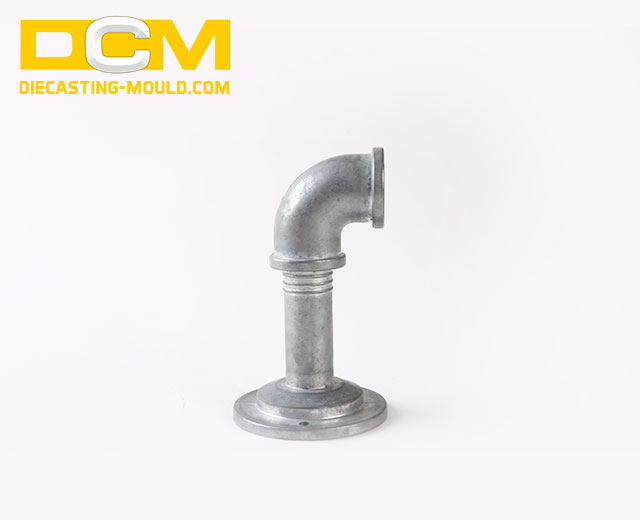
What are the common applications of die casting parts?
Furthermore, the lighting industry, particularly in the realm of modern illumination solutions, leverages die casting technology for various components. For instance, the creation of an oem die casting alloy led solar lamp shade demonstrates how this process can provide the necessary structural support and thermal management for advanced lighting systems. The precise casting allows for optimal heat dissipation from LED arrays, crucial for extending their lifespan, while also providing a durable and aesthetically pleasing housing for solar charging components and batteries in outdoor applications.
The medical sector also benefits significantly from the precision and sterility offered by die casting parts. Components for surgical instruments, imaging equipment, and laboratory apparatus often require intricate designs and smooth finishes that can be easily sterilized. Die casting provides the consistency and surface quality needed for these critical applications where reliability is paramount. Similarly, in the aerospace industry, while less common than in automotive due to extreme strength requirements, certain non-critical structural elements and internal components can be efficiently produced using die casting for weight savings and complexity.
In essence, the common applications of die casting parts span a vast array of industries, underscoring the process’s adaptability and efficiency. From the machines that power our world to the devices that connect us, the precision, strength, and cost-effectiveness of die cast components continue to drive innovation and enable the mass production of high-quality goods across global markets. As technology advances, the demand for sophisticated die casting parts will only continue to grow, pushing the boundaries of what is possible in manufacturing.